28 Jun 2026
Regulatory Shifts Reshaping Payout Mechanics Across App-Driven Card Rooms and Global Match Leagues

Regulatory bodies across multiple jurisdictions have introduced new compliance frameworks that directly alter how app-driven card rooms and global match leagues process player payouts, with several measures scheduled to take effect in June 2026. These changes focus on transaction verification, fund segregation, and reporting timelines, which forces platform operators to adjust backend systems that handle real-time settlements for poker variants, table games, and competitive esports or match-based events. Observers note that operators must now embed automated audit trails into their payout engines to satisfy updated standards from state and provincial regulators.
Updated Verification Protocols in Digital Card Environments
App-driven card rooms face stricter identity confirmation rules that extend beyond initial account creation and reach every payout request above certain thresholds, and this requirement stems from coordinated efforts among North American regulators to reduce fraud vectors that have grown with mobile adoption. Data from the Alcohol and Gaming Commission of Ontario shows a 27 percent rise in flagged transactions during 2025 pilot programs, prompting the agency to mandate multi-factor authentication tied to government-issued documents for withdrawals processed after June 2026. Platform developers have responded by integrating biometric checks and blockchain-based ledgers that timestamp each step from game completion to fund release, which reduces manual review delays while maintaining compliance logs that regulators can access on demand.
Those who operate global match leagues encounter parallel demands when their prize pools intersect with card-room style mechanics, particularly in hybrid formats that combine skill-based competitions with entry-fee structures. Regulators in several U.S. states now classify certain match-league payouts as gaming proceeds rather than pure skill awards, which triggers withholding obligations and detailed reporting that did not previously apply. This classification shift requires leagues to segment prize distributions according to participant location, thereby complicating the uniform payout flows that many apps once relied upon for speed and simplicity.
Cross-Border Fund Segregation Requirements
European regulators have aligned on new fund-segregation rules that affect any app serving players from multiple member states, and the approach requires operators to maintain separate accounts for player balances versus operational revenue. The approach mirrors earlier changes in Australia where the Australian Communications and Media Authority required similar ring-fencing for interactive wagering products, and those precedents now influence how North American platforms prepare for June 2026 deadlines. Operators must therefore redesign their reconciliation processes so that payout queues draw exclusively from segregated player pools, which eliminates the commingling practices that once allowed faster processing but raised audit concerns.
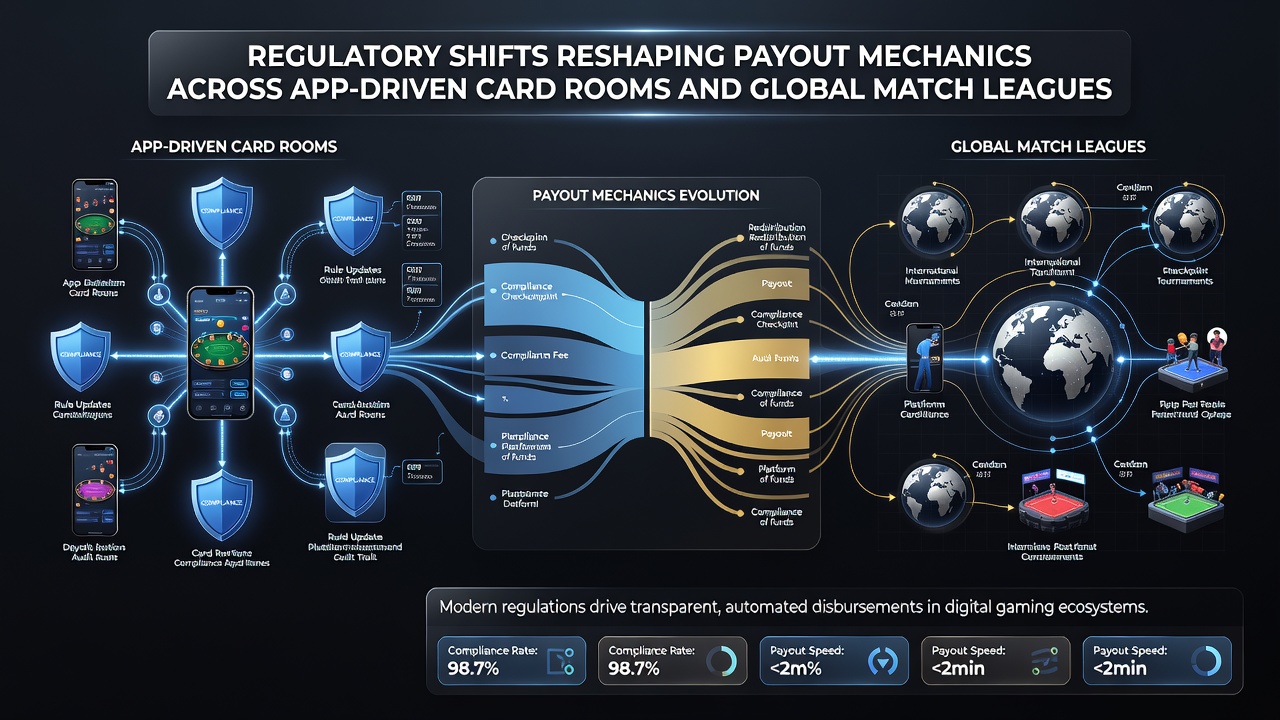
One case study released by the University of Nevada's International Gaming Institute examined three major card-room apps that adjusted their systems ahead of similar rules in 2024, and the study found average settlement times increased by 14 hours during the transition period before stabilizing once automated compliance layers were fully deployed. League operators have begun similar testing cycles, especially for tournaments that award cash prizes across borders, because mismatched jurisdictional rules can block entire prize distributions until each participant's regulatory status is verified.
Impact on Real-Time Settlement Engines
Real-time settlement engines that power both card rooms and match leagues must now accommodate variable tax and fee deductions that differ by jurisdiction and player status, and this variability replaces the flat-rate models many platforms previously used. Research conducted by the European Gaming and Betting Association indicates that dynamic deduction engines reduce post-payout disputes by 31 percent when they correctly apply location-specific rules at the moment of disbursement. Developers have therefore embedded jurisdiction-detection APIs that trigger the appropriate withholding schedule before funds leave the segregated account, which satisfies both the New Jersey Division of Gaming Enforcement reporting standards and emerging Canadian provincial guidelines that take effect in mid-2026.
Global match leagues that stream events and collect viewer contributions into prize pools face additional layers of oversight when those contributions qualify as gaming revenue under new definitions. Platforms must now distinguish between subscription revenue and contest-entry funds within the same transaction stream, and this distinction requires separate ledger entries that feed directly into regulatory dashboards. The result is a more granular payout architecture that tracks each revenue source through to final distribution while preserving audit trails that regulators can query without advance notice.
Conclusion
Regulatory shifts taking hold in June 2026 compel operators of app-driven card rooms and global match leagues to overhaul payout mechanics around verification, segregation, and real-time compliance. These adjustments align technical infrastructure with evolving legal definitions across North America and Europe, and the changes establish new operational baselines that platforms must meet to continue processing player funds at scale. Data from multiple regulatory sources shows measurable reductions in disputed transactions once the updated systems stabilize, which indicates the frameworks are achieving their intended transparency goals without halting industry growth.